




THE MIRACLE OF DESPAIR
2018 was probably the most important year of my life so far. It was a year of unorthodox adventure—quitting my crappy-but-decently-paid job to take to the road, volunteering to help those who seemed to have an even worse lot in life than me, and finally meeting people with the same adventurous spirit and disdain for protocol. It was a year I had long believed to be only a distant fantasy. Instead, I thought I was doomed to a life of ever-persistent safety nets, just like everyone else I knew.
So, when I finally decided to take that leap of faith away from routine and relative safety, you can imagine how monumental this was for me. It’s difficult to put the feeling of elation that comes with such a leap into words for those who haven’t experienced it themselves… but I’ll try, since that’s what I do.
When I was younger, I absolutely hated custard. My parents never made it at home, but I was practically force-fed it every day at the end of my school dinners. The stuff was grim yellow, with clay-like lumps of powder, and only a hint of sweetness to mask its slimy texture. I hated it, my friends hated it, and I’m pretty sure the dinner ladies (as they were called back then) hated it too. It sucked, so I naturally decided I didn’t like custard—and never would.
But when I was about ten years old, a family friend made us homemade apple and rhubarb pie with custard (yes, I’m British, in case you hadn’t already realised). I was raised to eat every last crumb of food on my plate, especially if it came from someone’s loving labour. So, quite despairingly, I submitted myself to what I assumed would be a long and torturous meal. Yet, suffice to say, ever since that meal, I’ve had custard with every pie—except meat ones.
The point is, I had no idea what I was missing because all I’d known of custard had been of the crappy variety. I didn’t really know what custard even was until I broadened my horizons just a little.
It’s the same with that feeling of elation. It’s no exaggeration to say that until I handed in that slip of paper in 2018 that said something like, “Thanks for the money, I’m out,” I had never truly experienced elation. That feeling of taking control of your own road, no matter how small the step, is irreplaceable.
So, I set off abroad. I had practically no plans other than getting to the country and one week booked at a bed-and-breakfast in Phuket. I wanted every part of this journey to feel like I was living on the edge, so I threw planning out the window.
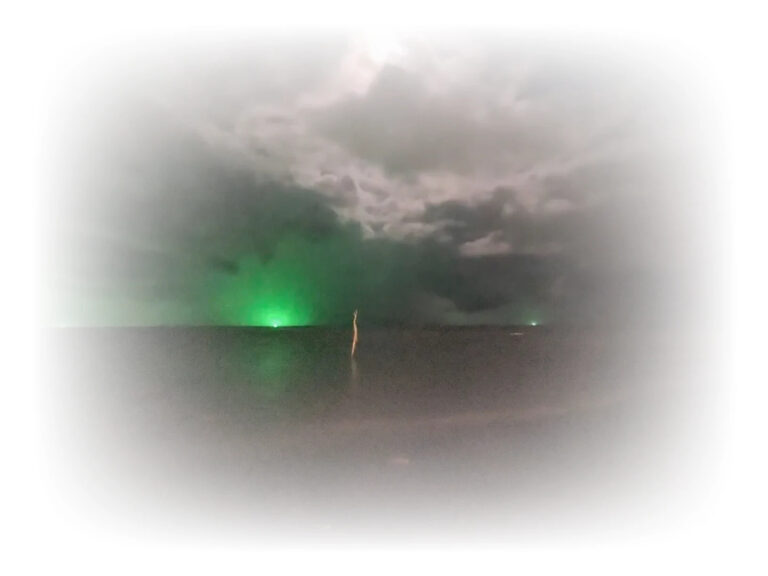
And I was living on the edge. Incredible countries, fascinating cultures, wonderful people, tough journeys, bouts of sickness, near-starvation (yes, honestly), fulfilling projects, heated encounters, storms at sea, simplistic island living—this trip had all the priceless memories I could have hoped for, and more.
So, after I returned to a massive homecoming with my loved ones, who repeatedly expressed their deep jealousy, and after I had time to reflect—what did I think of the year of my dreams?
It was okay.
Sadly, I’m not being facetious. It was just okay. As always, the present was far more important to me than the past. The past is done, and it was fun at the time. But honestly, even while I was on the road, I was always looking to the future, expecting it to be more colourful than the present, no matter how fulfilled I felt at the time.
This reflection gave me one of the most important yet heart-breaking realisations of my life, and a source of great despair after that elation: nothing is ever going to be enough.
Far from my expectations, the months following the year of my dreams were filled with a sense of hopelessness. I had just accomplished what I had dreamt of for years—the thing that was meant to put a new light in my life and instil in me a new sense of purpose—yet it had done just the opposite. I felt even more devoid of purpose and direction than when I was actually living what I’d considered a purposeless life. What exactly was I supposed to do now? I had absolutely no idea.
What made that time even worse was having no one to confide in. My friends and family still had a healthy measure of jealousy about my adventures, so how much sympathy could I expect if I told them it wasn’t enough?
That was another source of despair; I had so many friends and people to love, yet I had never felt so alone. So, what did I have to look forward to in life? All I could see were boring days where nothing would be enough, and no one to share my anguish with. Living the dream, right?
If it sounds like I’m wallowing in self-pity, don’t worry; I’m far beyond that point now. I’m sharing what I would define as my personal rock-bottom for two reasons.
Firstly, I want to highlight what I believe might be the price of fulfilling our dreams. Temporary fulfilment and memories are enough for some, but if they’re not enough for us, we’re setting ourselves up for some deep misery. The deepest form of despair, I believe, comes after the peak of hope and fulfilment. This is important because an enemy as strong as despair must be faced with a ready heart.
Secondly, I want to explain the meaning behind the title of this blog post: The Miracle of Despair. I want to share how despair and hitting absolute rock-bottom, changed my perspective on life forever.
During those painful months back home, I received some unexpected mental medicine from my nephew. He was six years old at the time and, by all accounts, gifted. For example, one of his favourite hobbies was watching the football (or soccer for readers across the water) results on TV, then writing out all the scores the next day for his parents, complete with team kit colours and emblems. He’s absolutely ridiculous.
One weekend, while babysitting him and his sisters, we played Super Mario Bros. (the original from the eighties, the one packaged with Duck Hunt and its orange airgun—a staple of my childhood). We reached what I think was the final level in Bowser’s castle. Mario leapt over Bowser, flipped the switch to collapse the bridge… but instead of falling into the lava, Bowser got stuck in mid-air, with Mario stranded on the platform. It must have been a bug. Now there was no way to defeat Bowser!
“What have you done?” I joked. “Now you can’t get to Bowser!”
And he replied: “Bowser can’t get to Mario either!”
The lesson hit me like a slap in the face. I must have known it on some level, but hearing it aloud from another person was different. It was exactly what I needed.
The lesson: when you’ve tasted the deepest despair, nothing else compares. When you’ve hit rock-bottom, there’s not much further you can sink.
This meant that suddenly, I realised I had the freedom to do practically anything. I had nothing left in my life I truly wanted, so what was there left to fear? The answer: nothing I wasn’t already enduring.
Despair is like a weight on the mind. The longer it’s there, the more stress and strain it causes. But this also works in reverse. The more our minds carry despair, the stronger they become. The heavier the despair, the more resilient we are at the end of it—provided it doesn’t break us.
I’m not saying we should actively seek out despair—there lies madness. But when despair inevitably comes as the price for our highs, we should take it for what it is: another obstacle to overcome for an even higher peak.
And that is the miracle of despair. Despair is its own worst enemy. If we have a healthy perspective on life’s harshness, despair will exist only to teach us how to overcome it.
So, to those who give the shallow yet oft-repeated advice to “look on the bright side,” I respectfully disagree. Of course, it’s important to stay optimistic, but telling someone in the depths of despair to “be optimistic” is like telling someone starving that they need to eat. The word duh comes to mind.
Sometimes we need to feel a little hunger to appreciate food. Sometimes we must embrace the darkness to understand the bright side. We shouldn’t fear it. It can do no more to us than it already has.